 Skip to content
When a tubular heater, cartridge heater, or immersion element fails prematurely, the expensive resistance wire is almost never the root cause. Field teardown analyses consistently show that the majority of heating element failures trace back to the insulating filler material between the wire and the metal sheath. That filler is electrical grade magnesium oxide (MgO) powder — and its quality directly controls how long your heater lasts, how efficiently it transfers heat, and whether it meets electrical safety standards.
For over a century, MgO has remained the industry-standard dielectric filler for metal-sheathed heating elements. The reason is simple: it combines two properties that most materials cannot — high thermal conductivity and exceptional electrical insulation — while remaining mechanically workable during the swaging and rolling processes that give a heating element its final form.
This guide walks through the material science, the technical specifications that matter, the grade selection framework, and the supplier evaluation criteria that heating element manufacturers need to get right.

Inside the Heating Element: How MgO Powder Works
The Dual Role of the Filler
Inside every tubular heating element, a coiled resistance wire (typically NiCr alloy) sits centered within a metal sheath (stainless steel, Incoloy, copper, or aluminum). The space between them is densely packed with MgO powder. This filler must simultaneously:
- Conduct heat away from the wire — preventing the resistance wire from overheating and melting.
- Block electrical current from reaching the sheath — ensuring operator safety and compliance with leakage current limits.
These two requirements appear contradictory. Metals conduct both heat and electricity; most insulators block both. MgO resolves this through its atomic structure.
The Physical Mechanism
Magnesium oxide is a highly ionic compound with a rock-salt crystalline lattice. Its valence band is completely full and its conduction band is empty, separated by a bandgap of approximately 7.8 eV — far wider than the thermal energy available even at 1,000°C. This means free electrons cannot easily cross into the conduction band, so electrical conductivity remains essentially zero under normal operating conditions.
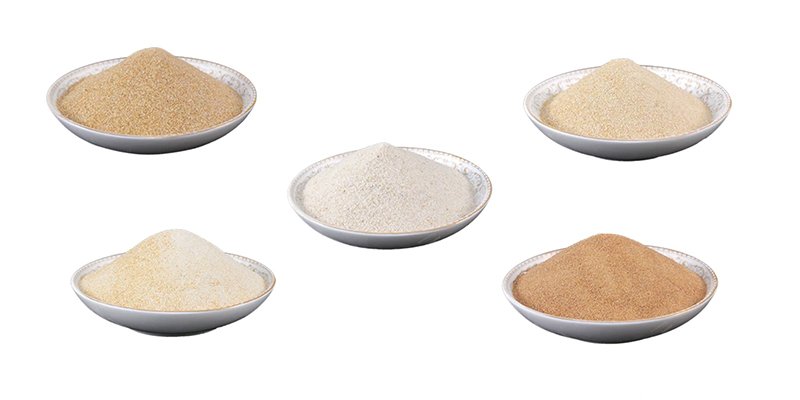
For heat transfer, MgO relies on phonon lattice vibrations rather than electron transport. In high-purity fused magnesia, the lightweight, tightly bonded ions form a symmetric, rigid lattice. When heat excites localized vibrations, they travel through the material as collective waves (phonons). In a properly compacted powder matrix, the mean free path of these phonons is long enough to deliver excellent thermal conductivity.
Why Compaction Changes Everything
Loose, poured MgO powder has a thermal conductivity close to stagnant air — roughly 0.05 W/(m·K). That is not enough to protect the resistance wire. The manufacturing process of tube rolling or rotary swaging compresses the powder from a loose tap density of 1.4–1.6 g/cm³ to a compacted density of 2.2–2.4 g/cm³. At this density:
- Crystal grains fracture, realign, and interlock into intimate physical contact.
- Air voids are eliminated, removing partial-discharge risk under high voltage.
- Thermal conductivity rises dramatically because grain-boundary thermal resistance drops.
Without sufficient compaction, the resistance wire cannot shed its heat. Wire temperature skyrockets past its metallurgical limit, and the element burns out — often within hours of first energization.
The Four Technical Specifications That Actually Matter
Not every magnesium oxide product labeled "electrical grade" performs the same. These four specifications determine whether your heating element will meet its design lifespan.
1. Purity and Impurity Control
MgO content directly governs high-temperature electrical resistance. Impurities such as iron oxide, silica, and calcium form low-melting-point glassy phases at elevated temperatures. These phases not only collapse insulation resistance but also corrode the NiCr resistance wire. Trace sulfur and boron can cause severe wire erosion above 1,000°C.
| Purity Level | MgO Content | Typical Use Case |
|---|---|---|
| Standard electrical grade | ≥ 96% | Medium-temperature appliances, water heaters |
| High-temperature grade | ≥ 98% | High surface-load air heaters, industrial ovens |
2. Moisture Content and Hygroscopicity
MgO is chemically hygroscopic. When exposed to atmospheric moisture, it hydrates into magnesium hydroxide (brucite), triggering two failure modes:
- Electrical collapse: Magnesium hydroxide is a far weaker insulator; hydroxyl groups provide ionic conduction paths that drop insulation resistance from megaohms to near zero.
- Mechanical destruction: The hydration reaction causes approximately 25% volumetric expansion. Inside a rigid swaged tube, this expansion displaces the wire, crushes clearances, and can split the sheath along weld seams.
Premium electrical grade MgO should have a moisture content of ≤ 0.5% and may receive silicone oil surface treatment to slow moisture uptake during storage and initial startup.
3. Particle Size Distribution and Flowability
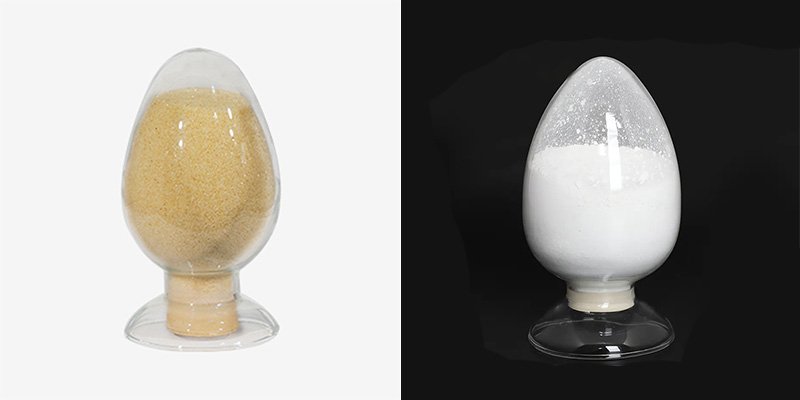
Particle shape and grading determine how well the powder fills the tube and how densely it compacts. Fused magnesia particles should be near-spherical or rhombohedral — not flaky or needle-like. A well-graded blend of coarse (40–60 mesh), medium (60–100 mesh), and fine (>100 mesh) grains allows smaller particles to fill the voids between larger ones, maximizing packing density.
Typical particle size range: 60–200 mesh, customizable to specific filling equipment and tube geometries.
- Finer powder → better insulation, harder to compact
- Coarser powder → better filling density, lower insulation
- A balanced distribution is the goal.
4. Bulk Density and Compaction Behavior
Bulk density (typically 2.3–3.3 g/cm³ as supplied) indicates how much mass fits in a given volume before compaction. More importantly, the powder’s compaction curve — how density responds to rolling or swaging reduction — determines whether the target compacted density of 2.2–2.4 g/cm³ is achievable without damaging the wire.
MgO’s moderate Mohs hardness (5.5–6.0) is a deliberate advantage here. It is hard enough to form a stable compacted matrix but soft enough that during swaging it does not cut or damage the delicate NiCr resistance wire — a problem that would rule out harder alternatives like alumina (Mohs 9.0).
Selecting the Right MgO Grade: A Decision Framework
Grade selection depends on three variables: heating method, surface load (watt density), and sheath material.
By Heating Method
| Application Environment | Recommended Grade |
|---|---|
| Dry-burning in air | High-temperature type; or high-temperature moisture-proof type for long-term stability |
| Water / immersion heating | Heavy silicone-modified (medium-temperature moisture-proof) powder |
| Oven tubes with annealing | Medium-temperature or high-temperature moisture-proof powder |
| Heat treatment up to 1,050°C | Specific high-temperature grade matched to tube length and surface load |
By Surface Load (Watt Density)
| Surface Load | Required Grade |
|---|---|
| Below 6 W/cm² | Low-temperature or medium-low-temperature powder |
| Below 8 W/cm² | Medium-temperature powder |
| Below 9 W/cm² | Medium-to-high-temperature powder |
By Sheath Material
| Tube Material | Common Application | Recommended Grade |
|---|---|---|
| Copper | Water immersion heaters (may undergo 500–660°C bending heat treatment) | Medium-to-low-temperature powder; standard grade if only 250–350°C moisture removal |
| Aluminum | Die-cast horseshoe tubes, contact conduction | Low-temperature powder; request high-density samples |
| Bundy (copper-plated steel) | Embedded elements in bread makers and appliances | Low-temperature powder |
| Stainless steel | Strong-convection air heaters | Medium-to-high-temperature powder |
| Embedded / contact conduction | Mold heaters, instantaneous water heaters | Low-temperature generally; medium/high-temp moisture-proof for molds below 700°C |
| Industrial heavy-duty | Dry-fired process heaters | Medium-temperature and high-temperature; light-silicone high-temp for added moisture protection |
Chimag’s MgO Product Line: Grade-by-Grade Breakdown
CHIMAG, based in Yingkou, Liaoning — one of China’s primary magnesium industry bases — manufactures electrical grade MgO powder across three temperature tiers plus a cable-grade line.
CM-H Series (High-Temperature Type)
- Process: Secondary high-temperature calcination in rotary kilns; minimal or no silicone oil addition.
- Best for: High surface-load heating elements — air heating, industrial ovens, air-conditioning heating tubes.
- Key property: Withstands heat treatment up to 1,050°C while maintaining insulation performance.
- Caveat: Does not have moisture-proof properties; requires timely sealing after filling.

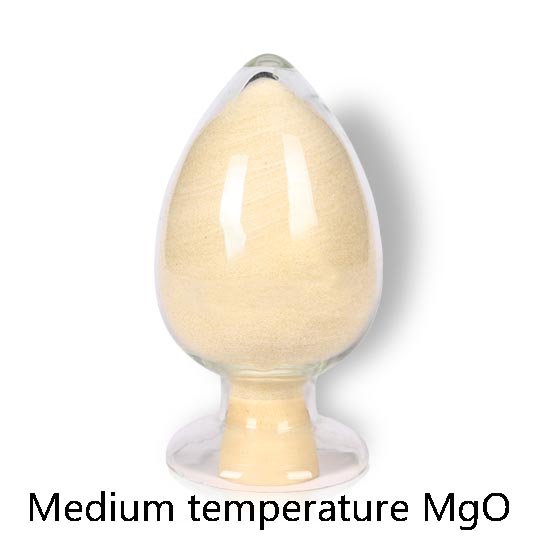
CM-M / CMM Series (Medium-Temperature, Moisture-Proof)
- Process: Surface-treated with high-grade silicone oil.
- Best for: Domestic water heaters, washing machines, medium-load tubular elements, and general-purpose heating elements requiring balanced insulation and thermal conduction.
- Key property: Good electrical performance combined with moisture resistance during storage and startup.
- Track record: The CMM series has been shipped in volume to markets including South Korea and India for industrial and appliance heating applications.
L Series (Low-Temperature Type)
- Best for: Low-power-load heating tubes — water dispensers, electric irons, soy milk machines, Bundy tube embedded elements.
- Key property: Optimized for cost-performance in applications where operating wire temperatures remain modest.

Cable-Grade MgO Powder
- Best for: Mineral-insulated (MI) cables and fireproof cables.
- Key property: Operating temperatures up to 1,300°C with moisture-proof treatment; particle composition customizable to cable construction.
Quick Comparison
| Series | Temp Range | Moisture Proof | Primary Applications |
|---|---|---|---|
| CM-H | High (up to 1,050°C heat treatment) | No (seal promptly) | Air heaters, industrial ovens, high watt density |
| CM-M / CMM | Medium | Yes (silicone oil) | Water heaters, washing machines, general tubular |
| L | Low | Standard | Water dispensers, irons, small appliances |
| Cable grade | Up to 1,300°C | Yes | MI cables, fireproof cables |
Common Failure Modes Tied to MgO Quality
Understanding how MgO problems manifest in the field helps diagnose whether a heater failure is a powder issue, a process issue, or both.
Thermal Lag and Uneven Heating
Low-purity MgO contains impurities that act as thermal barriers. Heat cannot transfer quickly from the wire to the sheath, causing the sheath temperature to lag behind design specifications. Uneven particle distribution or poor flowability creates localized hot spots and cold spots; over time, the wire at a hot spot melts and breaks.
Dielectric Breakdown on Startup
High-moisture powder, or powder that absorbed humidity during storage, can cause immediate insulation breakdown the first time the element is energized. This is why moisture content ≤ 0.5% and proper storage (low humidity, sealed containers) are non-negotiable.
Compaction-Induced Wire Damage
Powder that is too coarse, too angular, or poorly graded may not compact uniformly. Thin insulation spots or wire eccentricity drift create localized dielectric weaknesses that fail under voltage. In-line hi-pot (AC dielectric strength) testing immediately after swaging catches these before final assembly.
Long-Term High-Temperature Resistance Decay
MgO’s volume resistivity drops exponentially with temperature — from ~10¹⁵–10¹⁶ Ω·cm at 20°C to 10⁷–10⁸ Ω·cm at 800°C. Designers must calculate leakage current limits based on worst-case high-temperature values, not room-temperature datasheet figures. Using a grade below the application’s temperature class guarantees premature resistance decay.
Manufacturing and Quality Control: What to Ask Your Supplier
Raw Material Origin
Yingkou, Liaoning is one of China’s most important magnesium oxide raw material bases. Sourcing locally and controlling production at the factory level provides stable raw material supply, consistent chemical composition, and better cost control than trading companies that aggregate from multiple sources.
Fused vs. Sintered Magnesia
| Property | Fused Magnesia (Periclase) | Sintered (Calcinated) Magnesia |
|---|---|---|
| Production | Electric arc furnace melting above 2,800°C | Heating to 1,600–2,000°C without melting |
| Crystal structure | Highly crystalline, large grain boundaries | Smaller grains, higher internal porosity |
| Impurity level | Very low | Higher trace impurities |
| High-temp resistivity | Superior | Lower |
| Best for | Heavy-duty industrial heaters, high watt density, high voltage | Low-temperature commercial appliances, cost-sensitive applications |
Quality Control Checklist for Suppliers
- [ ] Verified MgO purity (≥96% or ≥98%) with batch certificates
- [ ] Moisture content ≤ 0.5% confirmed per lot
- [ ] Controlled particle size distribution matching your filling equipment
- [ ] Bulk density within 2.3–3.3 g/cm³ with compaction behavior data
- [ ] ISO 9001 certified production facility
- [ ] Ability to provide samples for trial runs before bulk orders
- [ ] Technical support for grade selection and process troubleshooting
CHIMAG operates an ISO 9001-certified factory with over 30 years of manufacturing experience, serves 40+ countries, and uses processing equipment from XCMG and Hongcheng. The company also supplies full-range electric heating tube production equipment and offers one-stop supply chain integration covering tubes, heating wires, and related components.
Packaging, MOQ, and Logistics
| Parameter | Details |
|---|---|
| Standard packaging | 25 kg moisture-proof bags |
| Bulk packaging | 1 ton jumbo bags |
| Custom packaging | Available on request |
| Minimum order quantity | 1 ton |
| Lead time | 7–15 days |
| Trial orders | Available for new customers |
Storage recommendation: Once opened, use MgO powder quickly in a low-humidity environment (< 50% RH). Unopened moisture-proof bags should be stored in a dry warehouse away from direct moisture exposure.
Frequently Asked Questions
Q: Can I use any MgO powder for heating elements?
A: No. "Electrical grade" is a specific classification requiring controlled purity, low moisture, and graded particle size. Industrial or agricultural grade MgO will not provide the necessary insulation or thermal performance and will cause premature heater failure.
Q: How do I know which grade to use for my heater?
A: Start with your heating method (air, water, oven), surface load in W/cm², and sheath material. Cross-reference these against the selection tables above, or request a grade recommendation from your supplier’s technical team.
Q: Why does MgO powder need silicone oil treatment?
A: MgO is naturally hygroscopic. Silicone oil surface treatment slows moisture absorption during storage, transportation, and initial heater startup, preserving insulation resistance until the element’s end seals are fully cured.
Q: What happens if compaction density is too low?
A: The powder retains air voids, thermal conductivity stays poor, the resistance wire overheats, and the element burns out quickly. Target compacted density is 2.2–2.4 g/cm³, verified by cross-section dissection and water-displacement volume measurement.
Q: Is alumina a viable alternative to MgO for tubular heaters?
A: Not recommended for tubular heating elements. Alumina (Al₂O₃) has lower high-temperature thermal conductivity (5–6 W/(m·K) at 1,000°C vs. 7–10 for MgO) and its Mohs 9.0 hardness means sharp particles cut the resistance wire during swaging. Alumina is better suited for ceramic insulators, structural components, and electronic substrates.
Q: What is the maximum working temperature for electrical grade MgO?
A: Standard grades support working temperatures up to 1,000°C. High-temperature CM-H series withstands heat treatment up to 1,050°C. Cable-grade MgO supports operating temperatures up to 1,300°C.
Q: How should I handle moisture-damaged MgO in a finished heater?
A: If a heater shows low megohm readings due to moisture ingress, a bake-out at 350–450°C for 4–6 hours can reverse hydration by converting hydroxide back to MgO and venting water vapor. After restoration, apply a proper end seal (epoxy for up to 150°C, silicone for up to 250°C, or glass-to-metal for critical high-temperature applications).
Q: Can CHIMAG customize particle size distribution?
A: Yes. Particle size, bulk density, and application-specific formulations can be customized to match your heating element design and manufacturing process.
Making the Right MgO Decision
The quality of your heating element is only as good as the MgO powder inside it. Purity controls high-temperature insulation. Moisture control prevents catastrophic startup failures. Particle grading determines compaction density and thermal efficiency. And the right temperature grade ensures the material survives your application’s actual operating conditions.
Choosing a supplier who controls raw material sourcing, maintains ISO-certified production, provides batch-level quality data, and offers technical support for grade selection reduces your production risk and field failure rate.
CHIMAG manufactures electrical grade MgO powder from its Yingkou facility, with product lines spanning high-temperature (CM-H), medium-temperature moisture-proof (CM-M/CMM), low-temperature (L), and cable-grade formulations. With 30+ years of experience, exports to 40+ countries, and sample availability for trial runs, the company works with heating element manufacturers to match powder specifications to specific production processes.
Ready to evaluate the right MgO grade for your heating element line? Contact the CHIMAG technical team for customized particle distribution, material samples, and a tailored quote.
