 Skip to content
Choosing the correct grade of magnesium oxide (MgO) powder is critical for the performance and lifespan of electric heating elements. The selection process primarily depends on the heating medium, working temperature, and surface load (watt density). Below is a comprehensive guide to help you select the optimal MgO powder for your specific application.
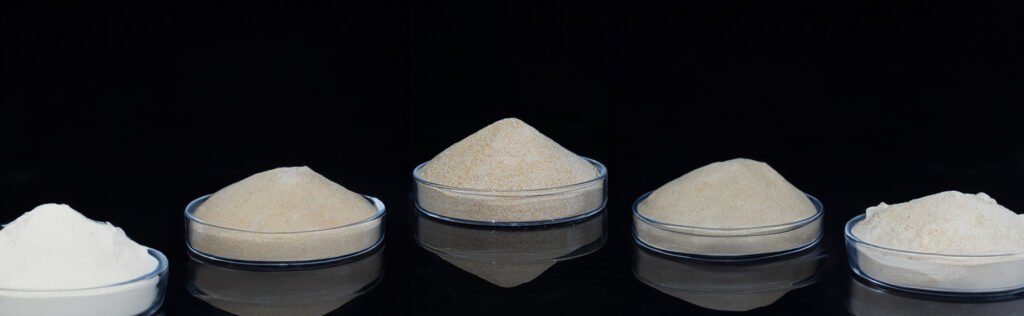
1. Selection Based on Heating Methods
- Dry-Burning in Air: Elements exposed to air typically require our High-Temperature MgO powder series. Alternatively, a High-Temperature & Moisture-Proof series is highly recommended to ensure long-term stability.
- Water / Immersion Heating: For standard liquid heating, Heavy Silicon-Modified powder is ideal. If the testing parameters require simulated dry-burning experiments, opt for the High-Temperature & Moisture-Proof series.
- Oven Heating Tubes: For tubes that undergo annealing (pre-heated until the empty tube exhibits a shiny, green-black finish), it is best to use Medium-Temperature or High-Temperature & Moisture-Proof MgO powders.
- High-Temperature Heat Treatment (up to 1050°C): If the tubular heater undergoes intense heat treatment, select a specific High-Temperature powder grade based on the tube’s length and surface load, ensuring no secondary reshaping is required.
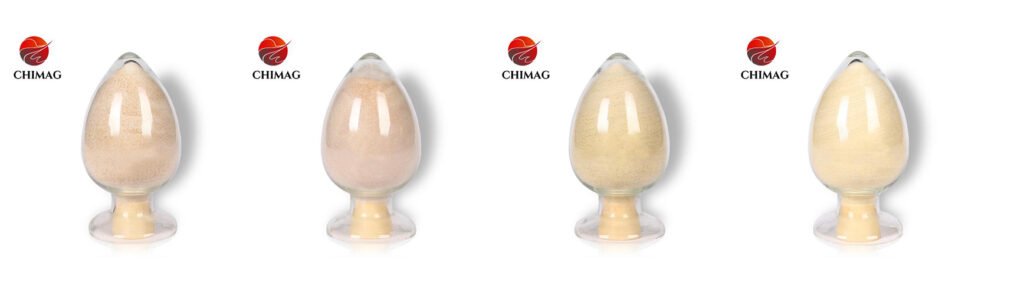
2. Selection Based on Surface Load (Watt Density)
The operating temperature is directly correlated with the element’s watt density (surface load). Consider the following thresholds:
- Below 6 W/cm²: Suitable for Low-Temperature or Medium-Low-Temperature MgO powders.
- Below 8 W/cm²: Requires Medium-Temperature MgO powder.
- Below 9 W/cm²: Requires Medium-to-High-Temperature MgO powder.
3. Selection for Specific Tube Materials & Environments
For non-air-fired elements—especially those relying on strong convection or contact thermal conduction (e.g., Copper, Aluminum, Bundy, or Stainless Steel)—the material dictates the powder choice:
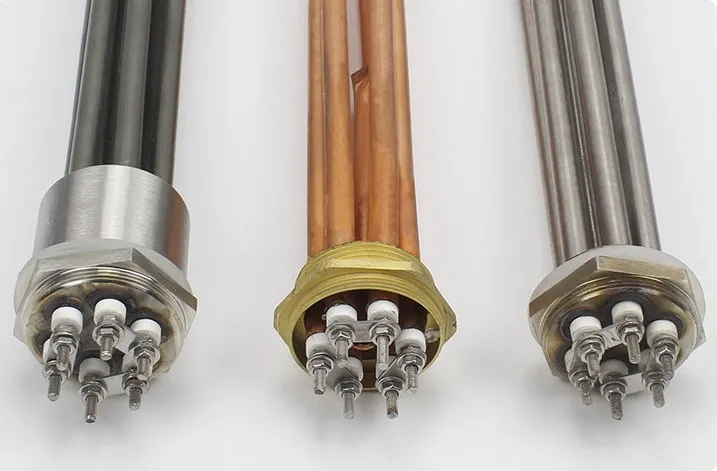
- Copper Tubes (Mainly Water Immersion Heaters):
Often formed into spiral shapes, these tubes may undergo brief heat treatment (500°C–660°C) for bending. They require modified MgO powder with excellent moisture resistance and thermal conductivity, though dry-burning leakage current requirements are lenient. Recommendation: Medium-to-Low-Temperature powders. If no heat treatment is applied (only 250°C–350°C moisture removal), standard grades can be used. - Aluminum Tubes (Contact Heat Conduction):
Commonly used in die-cast horseshoe tubes. Due to aluminum’s lower hardness, high-density MgO powder is required (we recommend requesting high-density samples). Some processes involve brazing, requiring good moisture resistance and thermal conductivity. Recommendation: Low-Temperature MgO powders. - Bundy Tubes (Copper-Plated Steel):
Designed to prevent short-term rust, Bundy tubes are often used as embedded heating elements in appliances like bread makers. Recommendation: Low-Temperature MgO powders are highly suitable. - Stainless Steel Tubes (Strong Air Convection):
These are dry-fired, but surface temperatures are rapidly dissipated by strong convection (airflow). The thermal stress on the MgO powder is similar to water heating. Warning: If the airflow is insufficient to cool the tube quickly, it may melt or burst. - Contact Thermal Conduction (Embedded Heaters):
These elements are embedded directly into the heating media (e.g., mold heaters, instantaneous water heaters). While many can use Low-Temperature powders, specific applications vary. For instance, mold heaters operating below 700°C requiring moisture resistance should use Medium-Temperature, High-Temperature, or Moisture-Proof MgO powders. - Industrial Heating Tubes:
Predominantly heavy-duty dry-fired tubes. Due to varying tube lengths and complex application environments, Medium-Temperature and High-Temperature powders are standard. Light silicon-treated high-temperature powders are also used to provide additional moisture-proofing.
