 Skip to content
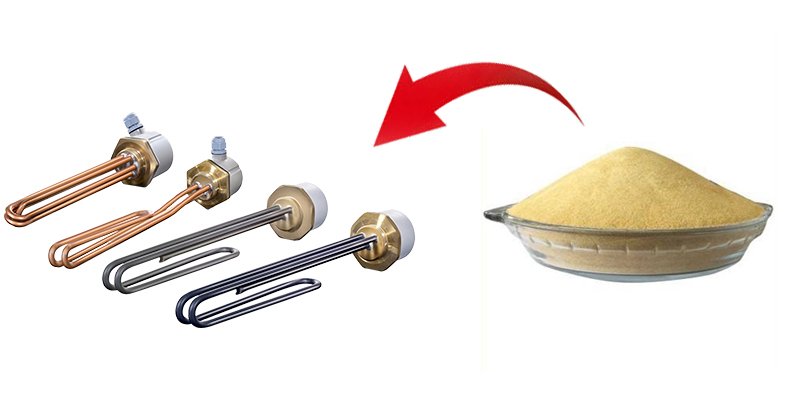
Every electric heating element — from a cartridge heater in an industrial mold to a tubular element in a water heater — depends on one unsung material: electrical grade magnesium oxide (MgO) powder. It sits between the resistance wire and the metal sheath, doing a job that sounds contradictory: blocking electricity completely while conducting heat rapidly.
Choose the wrong grade, and you end up with leaky insulation, short heater life, or field failures. Choose it well, and your elements run cooler, safer, and longer. This guide explains what electrical grade MgO powder is, why it works, how to pick the right grade, and how to process it correctly — with real technical specifications from CHIMAG, an ISO 9001-certified MgO powder manufacturer in Yingkou, China.
What Is Electrical Grade Magnesium Oxide Powder?
Electrical grade magnesium oxide is a highly refined, crystalline ceramic powder made from calcined magnesite. Unlike standard agricultural or commercial MgO, the electrical grade is purified and crushed to a tight particle size distribution, with magnetic impurities removed so it can serve as a reliable dielectric inside heating elements.
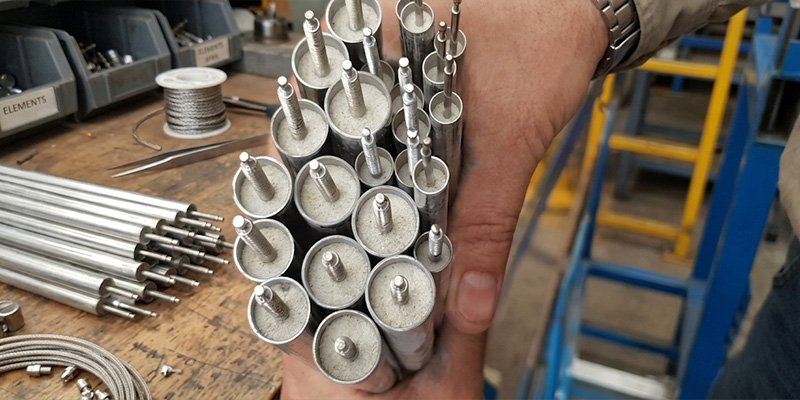
In a typical heater, a resistive wire (such as Nichrome) runs through the center of a metal tube, and MgO powder is densely packed into the gap between the wire and the sheath. The powder performs two jobs at once:
- Electrical insulation — it keeps the live current inside the wire and prevents short-circuiting to the metal sheath.
- Thermal conduction — it transfers heat from the wire to the outer sheath quickly, so the element heats its surroundings efficiently.
Why Is MgO the Industry-Standard Insulator?
Magnesium oxide is an ionic compound with a rock-salt crystalline lattice. Its unusually wide bandgap (~7.8 eV) means electrons cannot easily jump into the conduction band, so MgO stays a near-perfect insulator even at high temperature. Because it has no free electrons, it conducts heat through phonon (lattice vibration) transport instead — which is exactly why it can block electricity and pass heat at the same time.
That dual property is rare. Polymer dielectrics break down above ~800 °C, and many ceramics are either poor thermal conductors or too brittle to survive tube bending. Powdered MgO, once compacted, forms a dense crystalline matrix that locks the wire in place, survives mechanical reduction (rolling/swaging), and keeps its insulation resistance well above 800 °C when the grade and process are correct.
Key Technical Specifications of Electrical Grade MgO
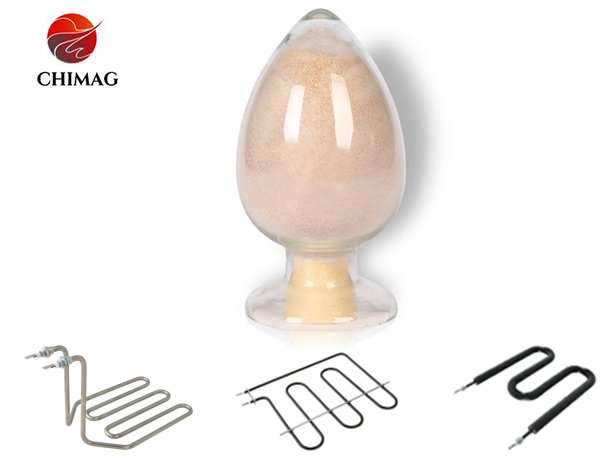
CHIMAG’s electrical grade MgO powder for heating elements is engineered around the parameters that actually matter on a production line:
| Parameter | Typical Value |
|---|---|
| MgO purity | ≥ 96% / ≥ 98% |
| Moisture content | ≤ 0.5% |
| Bulk density | 2.3 – 3.3 g/cm³ |
| Particle size | 60 – 200 mesh (customizable) |
| Working temperature | Up to 1000 °C |
| Thermal conductivity | High |
| Electrical insulation | Excellent |
Why low moisture matters: MgO is highly hygroscopic — it absorbs moisture easily. If moisture climbs too high, insulation resistance drops, leakage current rises, and heater life shortens. That is why ≤ 0.5% moisture is a critical control point.
Why particle size matters: Finer powder gives better insulation but is harder to compact; coarser powder fills faster but insulates less. A balanced particle size distribution is the key to both high filling density and stable electrical performance.
Main Grades: High, Medium, and Low Temperature MgO
CHIMAG classifies its electrical grade MgO into three series matched to operating temperature and application:
1. CM-H Series (High Temperature)
- Process: secondary high-temperature calcination in rotary kilns
- Applications: air heating, industrial ovens, high-surface-load elements
- Feature: withstands heat treatment up to 1050 °C with excellent insulation performance
High-temperature grade is typically not (or only lightly) silicone-treated, so it performs at extreme heat but has no built-in moisture resistance — it must be sealed promptly after filling.
2. CM-M Series (Medium Temperature, Moisture-Proof)
- Process: specially treated with high-grade silicone oil
- Applications: domestic water heaters, washing machines, medium-load tubes
- Feature: excellent moisture resistance and low leakage current; recommended load ≤ 9 W/cm²
Silicone treatment is what makes the medium-temperature grade moisture-tolerant, which is why it is the workhorse for household appliances that may sit in humid conditions.
3. CM-L Series (Low Temperature)
- Process: cost-optimized, moisture-proof grade
- Applications: water dispensers, electric irons, low-load appliances
- Feature: outstanding flowability for high filling density and cost-effective mass production

Example Chemical Analysis (High-Temperature Grades)
CHIMAG’s high-temperature grades are available with tight chemical control. Representative specifications (H9s / H9 / H8):
| Spec | MgO | CaO | Fe₂O₃ | SiO₂ | L.O.I | Magnetic | Sulfur | Carbon |
|---|---|---|---|---|---|---|---|---|
| H9s | ≥ 97% | ≤ 1.0% | ≤ 0.4% | ≤ 1.5% | ≤ 0.04% | ≤ 30 ppm | ≤ 10 ppm | ≤ 10 ppm |
| H9 | ≥ 96.5% | ≤ 1.5% | ≤ 0.5% | ≤ 2.0% | ≤ 0.04% | ≤ 40 ppm | ≤ 10 ppm | ≤ 10 ppm |
| H8 | ≥ 95% | ≤ 2.0% | ≤ 0.6% | ≤ 2.5% | ≤ 0.08% | ≤ 50 ppm | ≤ 10 ppm | ≤ 10 ppm |
Electrical performance targets: insulation resistance ≥ 1000 MΩ, withstand voltage ≥ 2500 V/1 mA, with thermal leakage current controlled from 0.02 mA at low watt densities up to ~0.5 mA at high watt densities (grade-dependent).
Applications of Electrical Grade MgO Powder
Electrical grade MgO powder is the core insulation material in:
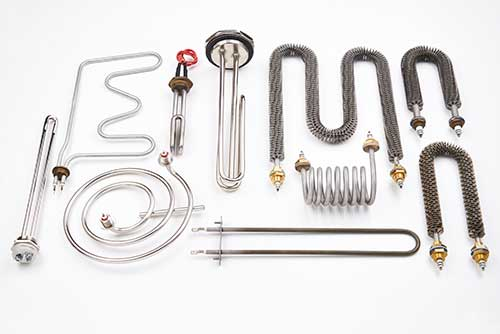
- Tubular heating elements — used in washing machines and industrial heating; the powder supports the coil during bending and rolling.
- Cartridge heaters — needs high-density packing and superior flowability to fill compact, high-watt-density molds.
- Immersion heaters — must withstand rapid thermal cycling and prolonged high-temperature exposure with zero electrical leakage.
- Electric heating rods and coils.
- Mineral-insulated (MICC) cables — a fully inorganic, fire-resistant insulation that does not burn or emit toxic fumes, allowing cables to keep operating emergency systems even in flames above 1000 °C.
How to Choose the Right MgO Powder for Your Heaters
Selection depends on four factors:
- Operating temperature. Match the grade to your element’s sustained heat: high-temperature (CM-H) for air heating and ovens, medium-temperature (CM-M) for water heaters, low-temperature (CM-L) for low-load appliances.
- Moisture environment. If your element or warehouse is humid, choose a silicone-treated, moisture-proof grade.
- Particle size distribution. A blend of coarse, medium, and fine grains packs best — smaller grains fill the voids between larger ones, raising tap density and insulation strength.
- Compaction and filling process. Your filling line and tube reduction ratio determine the flowability and density you need; suppliers can customize mesh size and bulk density to match.
Processing Precautions That Decide Heater Lifespan
Even premium powder fails if the process is wrong. Key points to get right:
- Wire selection for long tubes. For long stainless steel elements annealed at high temperature (e.g., 4–6 m tubes at 900 °C), use Nickel-Chromium (Ni-Cr) wire. Aluminum-rich Fe-Cr-Al wire scavenges oxygen from MgO at annealing temperature, turning the powder black and destroying its insulation.
- Compact properly. Loose powder conducts heat barely better than air. Mechanical rolling/swaging should compress MgO to a target density of roughly 2.2 – 2.4 g/cm³, which raises thermal conductivity to ~2.0 – 3.0 W/m·K and removes air voids that trigger partial discharge.
- Prepare the tube. Inner walls must be free of organic residue and rust; iron tubing needs acid-pickling, drying, and immediate filling.
- Pre-calcinate before filling. Roasting the powder removes trace organic impurities that can otherwise cause blackening inside the tube.
- Seal promptly. High-temperature grades have no moisture resistance, so seal element ends immediately after filling to prevent hygroscopic breakdown during storage.
Why CHIMAG for Electrical Grade MgO Powder?
CHIMAG is a magnesium oxide powder manufacturer based in Yingkou, Liaoning — China’s key magnesium industry base — with over 30 years of manufacturing experience and customers in more than 40 countries.
What the factory brings to buyers:
- Raw material proximity. Sourcing locally and controlling production in-house means stable supply, consistent chemical composition, better cost control than traders, and faster delivery.
- Certified quality. ISO 9001-certified factory; every batch undergoes electrical and physical testing to meet international insulation and thermal-conductivity standards.
- Scale. Monthly production capacity of over 2,000 tons across multiple automated grinding and high-temperature rotary kiln lines, using processing equipment from industry leaders XCMG and Hongcheng.
- Tailored supply. Customizable particle size distribution, bulk density control, moisture-resistant packaging, and OEM/bulk supply solutions.
- Export-tested packaging. For long sea routes, CHIMAG uses multi-layer moisture-barrier bags (25 kg kraft with PE inner liner), 1-ton FIBC jumbo bags, palletized stretch-wrapped loads, and container desiccants to keep powder dry in transit.
Typical commercial terms: MOQ 1 ton, lead time 7–15 days, 25 kg moisture-proof bags or 1-ton jumbo bags, with custom packaging available. Free samples are available for testing.
Frequently Asked Questions
Q1: What is the difference between high-temperature and low-temperature MgO powder?
Low-temperature powder is treated with silicone for moisture resistance but cannot handle extreme heat. High-temperature powder is untreated, withstands extreme heat (up to 1000 °C+), but requires strict humidity control and prompt end sealing.
Q2: Why does MgO powder turn black inside the tube?
Two common causes: reduction of MgO to metallic magnesium by aluminum-rich resistance wire during high-temperature annealing, or carbonization of trace organic impurities in the powder or on uncleaned tube walls.
Q3: What particle size is best?
Typical ranges are 60–200 mesh depending on the application. A balanced distribution — coarse, medium, and fine grains together — gives the best tap density and insulation performance.
Q4: Can I get a sample before ordering?
Yes. CHIMAG provides free samples (e.g., 25 kg) so you can test flowability, density, and electrical performance on your own line before committing.
Q5: What is the MOQ and delivery time?
MOQ is 1 ton and lead time is 7–15 days. Trial orders can be arranged for new customers, and customized particle size, bulk density, and packaging are available.
Conclusion
Electrical grade magnesium oxide powder is the quiet backbone of every reliable heating element — a material that insulates and conducts simultaneously. Choosing the right grade, controlling moisture and particle size, and processing it correctly will cut scrap rates, prevent electrical failures, and extend heater life.
If you manufacture cartridge heaters, tubular elements, immersion heaters, or mineral-insulated cables, getting your MgO powder right starts with the right supplier. Contact the CHIMAG technical team at chimagtech.com (WhatsApp: +86 18805152863) for a customized quote, material samples, and selection support matched to your exact production process.
This article is based on technical information published by CHIMAG (chimagtech.com), a magnesium oxide powder manufacturer in Yingkou, Liaoning, China.
