 Skip to content
Electrical grade magnesium oxide powder (MgO powder) is a critical insulating material used in tubular heating elements. It is filled between the resistance wire and metal sheath, providing electrical insulation, heat transfer, and structural support during operation.

For manufacturers of tubular heaters, immersion heaters, cartridge heaters, oven heating elements, and other industrial heating products, the quality of MgO powder directly affects product safety, heating efficiency, and service life.
Unlike ordinary magnesium oxide, electrical grade MgO powder is specially manufactured for high-temperature electrical applications. It requires high purity, controlled impurities, stable particle distribution, good flowability, and excellent moisture resistance.
However, MgO powders from different suppliers may have significant quality differences. A low-quality product may cause problems such as reduced insulation resistance, unstable heating performance, leakage current increase, and premature failure of heating elements.
Therefore, selecting the right electrical grade magnesium oxide powder requires evaluation from appearance, chemical composition, physical properties, electrical performance, and supplier capability.
Why Is Electrical Grade Magnesium Oxide Powder Important for Heating Elements?
Inside a tubular heating element, MgO powder is filled between the resistance wire and metal sheath. Although it is only a filling material, it performs three essential functions: electrical insulation, heat transfer, and mechanical support.
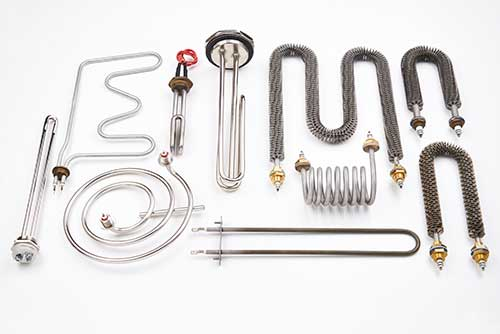
Electrical Insulation Performance
The main purpose of electrical grade MgO powder is to isolate the resistance wire from the metal sheath.
During operation, the resistance wire may reach several hundred degrees Celsius or even higher temperatures. The MgO insulation layer prevents electrical contact between the internal heating wire and the outer metal tube.
High-quality MgO powder helps maintain stable insulation resistance and reduces the risk of:
- Electrical leakage
- Insulation breakdown
- Short circuit failure
If MgO powder contains excessive moisture or conductive impurities, insulation performance may decrease significantly, especially during high-temperature operation.
Heat Transfer Capability
Magnesium oxide has excellent thermal conductivity while maintaining electrical insulation.
After the heating element is manufactured, compressed MgO powder transfers heat from the resistance wire to the metal sheath, allowing heat to be released efficiently.
The heat transfer ability depends on powder purity, particle distribution, and filling density.
Poor-quality MgO powder may contain excessive gaps after compression, creating thermal resistance inside the heater. This can lead to uneven temperature distribution and local overheating.
For industrial heating elements, stable heat transfer performance is essential for achieving longer service life.
How to Check Electrical Grade MgO Powder Quality Before Testing?
Before laboratory analysis, manufacturers can perform several basic inspections to evaluate powder quality.
These methods cannot replace professional testing but can help identify obvious differences between suppliers.

1. Appearance and Color Inspection
High-quality electrical grade magnesium oxide powder usually appears white or slightly yellowish-white with uniform color.
If the powder appears gray, dark, or contains visible abnormal particles, it may indicate problems during raw material processing or production control.
For example, dark-colored particles may come from:
- Carbon residue generated during processing
- Metallic contamination from equipment wear
- Uncontrolled impurities in raw materials
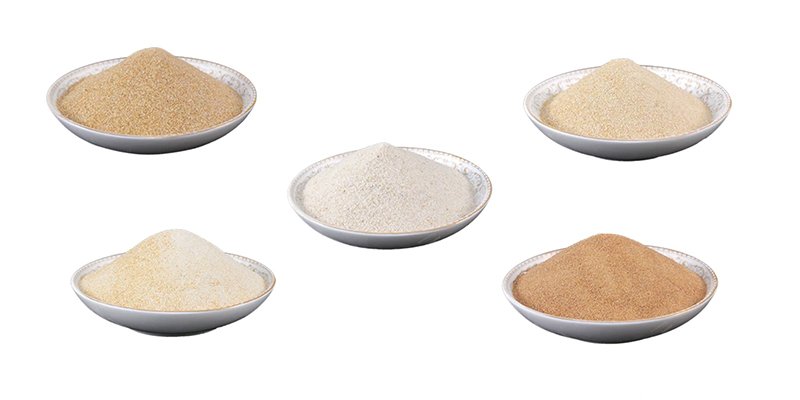
Although appearance is useful for initial screening, color alone cannot determine MgO quality because different production processes may slightly affect powder color.
2. Particle Structure and Uniformity
Particle characteristics directly influence powder filling performance.
During tubular heater manufacturing, MgO powder must fill the narrow space between the resistance wire and metal sheath evenly.
A well-controlled MgO powder should have a suitable particle structure that provides:
- Good flowability during filling
- High packing efficiency
- Stable insulation after compression
If the powder contains excessive irregular particles or poor particle distribution, it may cause uneven filling density.
This can create weak insulation areas inside the heating element and affect long-term reliability.
3. Flowability Evaluation
Flowability is an important production factor, especially for manufacturers using automatic filling equipment.
Good electrical grade MgO powder should move smoothly through filling systems without excessive bridging or blockage.
Poor flowability may be caused by:
- Moisture absorption during storage
- Improper particle size distribution
- Insufficient powder treatment
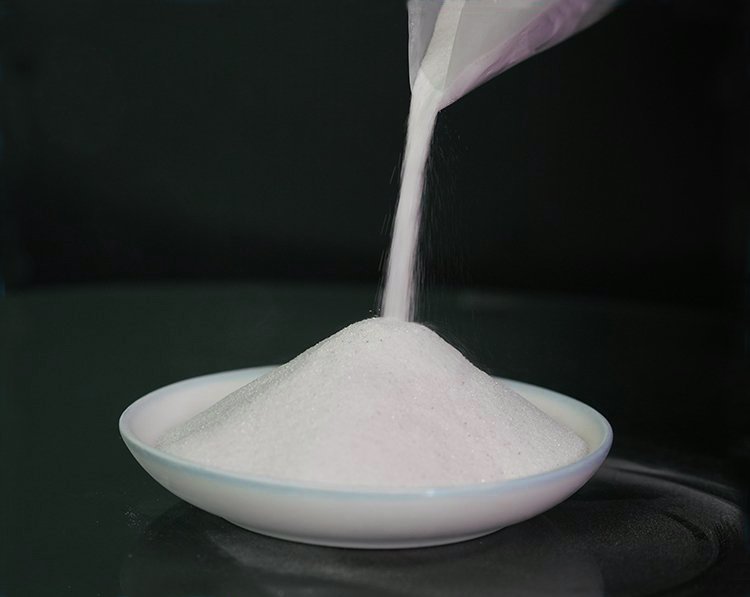
For mass production of tubular heating elements, stable flowability helps maintain consistent filling quality and reduces production defects.
Key Performance Indicators of Electrical Grade Magnesium Oxide Powder
Appearance inspection provides only preliminary information. The actual quality of MgO powder should be evaluated through chemical analysis, physical testing, and electrical performance measurement.
When purchasing MgO powder, heating element manufacturers should request supplier inspection reports and verify the following key properties.
MgO Purity and Chemical Composition
MgO content is one of the most important quality indicators.
High-purity magnesium oxide provides better electrical insulation, thermal stability, and long-term performance.
For high-temperature heating element applications, premium electrical grade MgO powder generally requires MgO content above 96%.
However, purity alone does not determine performance. The type and amount of impurities must also be controlled.
Important impurity factors include:
Iron oxide (Fe₂O₃):
Excessive iron compounds may reduce electrical resistance and affect insulation stability.
Calcium oxide (CaO):
High CaO levels may influence high-temperature stability and material consistency.
Magnetic impurities:
Metallic particles introduced during production or handling may affect electrical reliability and should be controlled at very low levels.
Particle Size Distribution and Tap Density
Particle size distribution determines how efficiently MgO powder can be filled and compressed inside heating elements.
A balanced particle structure allows smaller particles to fill the spaces between larger particles, improving packing density.
Good particle distribution helps achieve:
- More uniform filling
- Better heat transfer
- Improved insulation stability

Tap density reflects how tightly MgO particles can pack after vibration.
A suitable tap density improves the contact between particles and reduces internal air gaps.
However, higher density is not always better. The powder must maintain a balance between density, flowability, and insulation performance according to the heater design.
Electrical Performance
Electrical insulation performance is the most important requirement for MgO powder used in heating elements.
High-quality electrical grade MgO powder helps heaters maintain high insulation resistance during operation.
The final electrical performance depends on:
- MgO purity
- Moisture content
- Impurity control
- Compression quality during manufacturing
For industrial heaters operating continuously, stable insulation performance is essential to prevent electrical failure.
Moisture Resistance and Storage Stability
Magnesium oxide naturally absorbs moisture from the environment.
Once MgO powder becomes wet, its insulation performance may decrease, creating problems during heating element production and operation.
Loss on ignition (LOI) is commonly used to evaluate moisture and volatile content.
A lower LOI value usually indicates better drying quality and improved storage stability.
Proper storage conditions are also important. MgO powder should be kept in sealed moisture-resistant packaging and stored in a dry environment to prevent performance degradation.
Simple Methods to Verify MgO Powder Quality
For daily supplier comparison, manufacturers can perform several simple checks.
Moisture Absorption Check
Place a small amount of MgO powder in the air for observation.
High-quality powder should remain loose and maintain good flowability.
If the powder quickly absorbs moisture and forms hard lumps, it may indicate poor moisture protection or unsuitable storage conditions.

Foreign Matter Check
Spread the powder on clean white paper and carefully observe the sample.
Quality electrical grade MgO powder should have a clean and uniform appearance.
Visible abnormal substances, such as metal fragments from processing equipment, carbonized particles, or other manufacturing residues, may affect electrical performance and should be avoided.
How to Select the Right MgO Powder Supplier?
For heating element manufacturers, choosing MgO powder is not only about comparing price.
A reliable supplier should provide:
- Stable production quality
- Complete inspection reports
- Consistent batch performance
- Technical support for heating applications
A supplier with experience in heating elements can recommend suitable MgO powder according to different products, including tubular heaters, cartridge heaters, and industrial heating systems.
The correct MgO powder should match the customer’s production process rather than simply having the highest specification.
Electrical Grade MgO Powder vs Ordinary MgO Powder
Electrical grade MgO powder is specially designed for heating element applications.
Compared with ordinary magnesium oxide, it provides better control of:
- Purity
- Particle structure
- Moisture content
- Electrical insulation performance
Using ordinary MgO powder in heating elements may result in unstable insulation, inconsistent quality, and reduced product lifespan.
Frequently Asked Questions
Why is MgO powder used in heating elements?
MgO powder provides electrical insulation between the resistance wire and metal sheath while transferring heat efficiently.
What determines MgO powder quality?
Quality depends on a combination of MgO purity, impurity control, particle distribution, flowability, density, insulation performance, and moisture resistance.
Can ordinary MgO replace electrical grade MgO powder?
No. Ordinary MgO usually cannot meet the strict electrical and thermal requirements of heating element manufacturing.
How should buyers evaluate MgO powder suppliers?
Buyers should check technical reports, production capability, quality control systems, and supplier experience in heating element applications.
Conclusion
High-quality electrical grade magnesium oxide powder should have high purity, controlled impurities, stable particle characteristics, good flowability, reliable insulation performance, and strong moisture resistance.
For heating element manufacturers, selecting the right MgO powder supplier is an important step in improving product reliability and reducing production risks.
A professional electrical grade MgO powder supplier should provide not only stable materials but also consistent quality control and technical support for different heating applications.
